
Pest Control Shaped by the Homes of Northeast Philadelphia
Somerton Pest Control treats insects, traps and shuts out mice and rats, and runs recurring maintenance visits for homes and small businesses across Northeast Philadelphia and nearby towns.
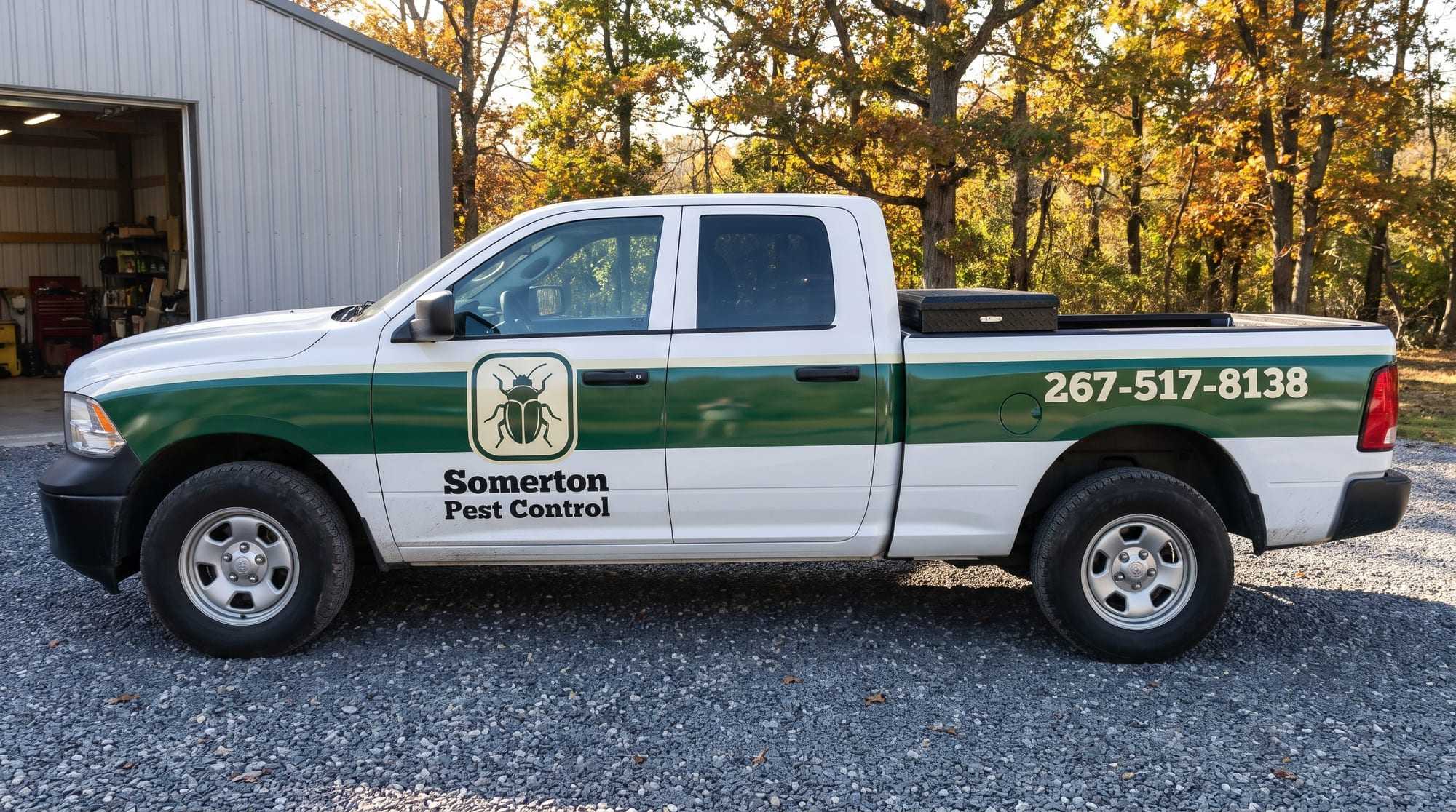
Our Work Centers on Northeast Philadelphia
We serve Northeast Philadelphia, including Somerton, Bustleton, Fox Chase and Mayfair, and reach into nearby Bensalem, Huntingdon Valley and Cheltenham, just over the city line. Porch-front rows, twins and single houses share those neighborhoods, and pests take no notice of property lines.
Philadelphia is built largely of brick rowhouses, many of them a century old or more, with shared walls, stone cellars and gaps where pipes and wires pass through. Add hot, humid summers, and mice, cockroaches and ants can travel between connected houses and stay active well beyond the warm months.

In a row of attached homes, a problem seldom belongs to one house. Mice follow pipes through party walls, cockroaches travel along plumbing runs, and a spray in one kitchen can push them into the next. The work rarely stops at one room either: roaches in a kitchen often follow the pipes to the bathroom above, and mice heard in a ceiling may be nesting in the cellar.
We Approach the Work in Three Parts
General insect treatment covers cockroaches, ants, bed bugs, fleas, spiders and wasps. The applications are targeted: indoors, and along foundations and entry points outside, at the cracks, voids and edges where insects hide and travel.
Each of those insects lives differently. German cockroaches stay close to kitchens and bathrooms, ants trail back to a nest that may be outdoors, fleas ride in on pets, and bed bugs travel in bags and furniture. Treating them well starts with knowing which one it is.
Rodent control for mice and rats starts with finding how the animals get in. Then it moves to trapping, and to sealing the openings around pipes, vents, rooflines and cellar walls, so the next ones cannot follow.
For homes and small businesses that want to stay ahead of problems, recurring maintenance visits keep bait stations and monitoring traps checked and treated areas under watch. How a job runs, from the first call to those visits, is laid out in how we work.
Treatment Alone Leaves the Door Open
What we stand for comes down to two habits: finding where the pests get in before anything else, and closing those openings as part of the job. In the trade, closing them is called exclusion.
The reason is practical. A spray or a trap deals with the pests already inside, while an open gap around a pipe, a vent or a crumbling cellar wall lets the next ones in. An older house can have many such openings, and it takes very little room for a mouse to use one. A treatment that leaves them open is likely to be needed again.
Exclusion is slower than spraying and harder to see once it is done, but it is the part of the work that still holds after the traps have been picked up.
Our manager, Kristian Bradshaw, came into the trade that way. Kristian’s first job in pest control was crawling under a South Philadelphia rowhouse with a flashlight, tracing where mice were getting in along a gas line.
Shops and Offices Face the Same Openings
The work is for homes and for small businesses. A corner shop, a small office or a takeout kitchen has the same pipes, vents and doors as the houses around it, and deliveries, trash and stored food give pests more reasons to stay.
In a business, the signs tend to show up in the back first: the storeroom, under the sinks, behind the coolers and around the delivery door. A business that wants to stay ahead of problems can keep the same recurring maintenance visits a household can, so activity is found on a check rather than by a customer.
Whether it is a house or a business, request service with a line or two about what you are finding, and we will take it from there.
For a house or a shop, the first question is where the pests get in.