
Kristian Bradshaw
The manager of Somerton Pest Control splits the week between jobs around Philadelphia and the office, and starts every call by looking for where the pests get in.
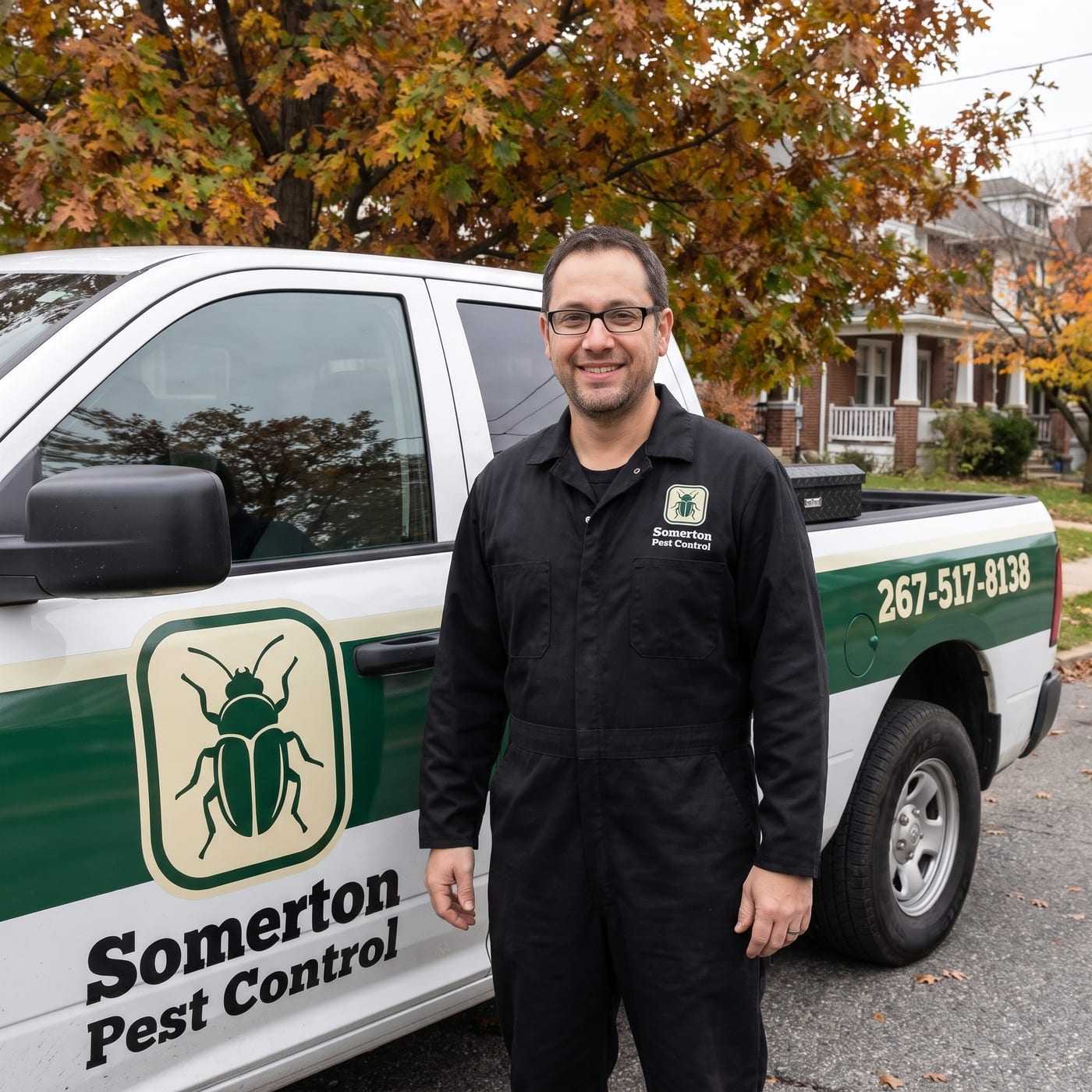
I’m Kristian Bradshaw. My first job in pest control was crawling under a South Philadelphia rowhouse with a flashlight, tracing where mice were getting in along a gas line. Looking for the entry point first is how I approach every call.
These days my week splits between the field and the office. Mornings are spent on jobs around Philadelphia, mostly inspections and follow-up visits. Afternoons go to returning calls, writing up estimates and ordering supplies. I keep Fridays light for rechecks and customers who need a second look.
Before I leave any job, I walk the outside of the property one more time and check that every gap I sealed is closed.
Every Pipe Through a Wall Can Be a Doorway
A Philadelphia rowhouse that has stood for a hundred years has been opened up many times: for gas and water lines, for electric service, and later for phone, cable and internet wires. Each line that passes through a cellar wall can leave a gap around it, and the mortar in old stone cellars wears away over the decades.
Mice use those gaps as doorways and the pipes as roads. A mouse needs an opening only about the width of a pencil, and once inside it follows pipe runs and wall cavities toward food and warmth. Trapping mice in the kitchen does little while the opening in the cellar stays as it was, which is why tracing a line back to where it enters the house comes first.
The same thinking runs through all three parts of the company’s work: insect treatment aimed at entry points as well as hiding places, rodent control that ends with openings sealed, and maintenance visits that keep watch on both.
Mornings Go to Inspections and Follow-Up Visits
An inspection is where a job is decided. It shows which pest is there, how far it has spread and how it is getting in: droppings along a wall, egg cases in a cabinet hinge, grease marks where a pipe enters, a gap at the sill plate. Without that, any treatment is a guess.
A follow-up visit shows whether the work is holding. In the trade, that means checking traps and bait, looking for fresh droppings or insects, and seeing whether sealed openings have stayed closed. Cockroach eggs can hatch weeks after a treatment, and mice in a wall may take days to reach a trap, so a single visit rarely tells the whole story.
A description over the phone points the way, but the signs that settle a question are found in the cellar, behind the stove and along the outside walls.
Fridays Are Kept Light for a Second Look
Some jobs need another visit before they are done, and some customers want someone to look again. A light Friday leaves room for both: a recheck of traps or bait stations, a room where activity has slowed but not stopped, or a sign a customer is unsure about.
A second look is ordinary in pest work. Insects hatch from eggs a treatment could not reach, a mouse can find a gap that was not there last month, and a new sighting sometimes turns out to be a different pest altogether. Seeing the place again is how a problem that is ending is told apart from one that has only moved.
If something is still turning up after a treatment, say so when you request service.
The Last Walk Checks Every Sealed Gap
That walk around the outside is the last step before leaving any job.
From outside, a building shows its openings in order: the foundation line, the pipes and wires where they enter, the vents, the joints along the roofline. A gap packed from the cellar side can still show daylight from the yard, and openings high on a wall are easier to judge from the sidewalk.
It ends the job the way it began, with attention on where pests get in. An opening left unchecked is where the next problem starts.
A call is where the search for the way in begins.