
Mice and Rats Trapped and Shut Out in Philadelphia
Mice and rats reach homes and businesses through gaps most people never notice. Our rodent control starts with finding how they get in, then moves to trapping and to sealing the openings around pipes, vents, rooflines and cellar walls.
Rats Come In Low and Mice Climb In High

Norway rats burrow along foundations, under sheds and beside trash cans, and work into a cellar through crumbling mortar in an old stone or brick wall, an open floor drain or a broken pipe. Once inside, they keep to the cellar and ground floor and run the same routes every night.
Mice climb. They come in where pipes and wires pass through walls, under doors and up at the roofline, and their numbers indoors rise each fall as the nights turn cold.
Can mice come through from the house next door?
Yes. In attached houses, mice follow shared walls, joists and the gaps where pipes cross from one cellar to the next. Sealing the openings on your side is the part you control, and it holds up better when the neighbors seal theirs too.
Droppings and Gnawing Show Which Rodent Moved In
Droppings, damage and where you find them usually tell which rodent you have, and that decides where traps go and which gaps come first.
| Rodent | Typical signs | Common entry points |
|---|---|---|
| House mouse | Droppings like grains of rice; gnawed packages; shredded nests; scratching in walls at night | Gaps around pipes and wires, under doors, at the roofline, in cellar walls |
| Norway rat | Droppings about three-quarters of an inch long; burrows by the foundation; greasy rub marks | Burrows under foundations and slabs, cracked cellar walls, floor drains, broken sewer pipes |
| Deer mouse | White belly and feet; droppings and stored seeds in boxes, drawers and parked cars | Gaps under garage and shed doors, vents and siding near wooded lots |
Signs of Rodent Activity to Look For
- Droppings along walls, in drawers, under the sink or behind the stove
- Gnawed corners on food packages, baseboards, doors or wiring
- Shredded paper, fabric or insulation gathered into a nest
- Scratching or scurrying inside walls and ceilings after dark
- Dark, greasy rub marks along walls, pipes and beams
- A sharp, musky smell in a closed cupboard or the cellar
- Fresh burrows by the foundation, under shrubs or beside a shed
- A pet staring at, or pawing at, the same wall or appliance
How small a gap can a mouse get through?
About a quarter of an inch, roughly the width of a pencil; a young rat needs about half an inch. If the head fits, the body follows, so small gaps around pipes matter as much as big holes.
Will mice leave on their own once they are in?
Rarely. Food, water and warmth give them every reason to stay, and a female mouse can have a new litter every few weeks, so a few mice in the fall can be dozens by spring.
Entry Points First, Then Trapping, Then Sealing
The order matters. Traps set before the way in is known catch the mice inside while new ones keep arriving, and sealing first can shut animals in to chew new holes or die in the walls. The visit itself runs as described in how we work.
Signs Grow Thicker Near the Opening
Tracing how they get in means following the evidence, which thickens near the opening. In an older house the usual gaps are around gas, water and drain pipes where they pass through the cellar wall, at loose vent covers, in crumbling mortar between foundation stones and where the roof meets the brick.
Traps Go Along the Walls Where Rodents Run
Mice and rats keep to the edges of a room rather than cross open floor, so traps belong along those runways, inside covered boxes wherever children or pets could reach them. Rats distrust anything new and may avoid a trap for days; mice are curious and usually find one quickly.
Copper Mesh and Mortar Close the Openings
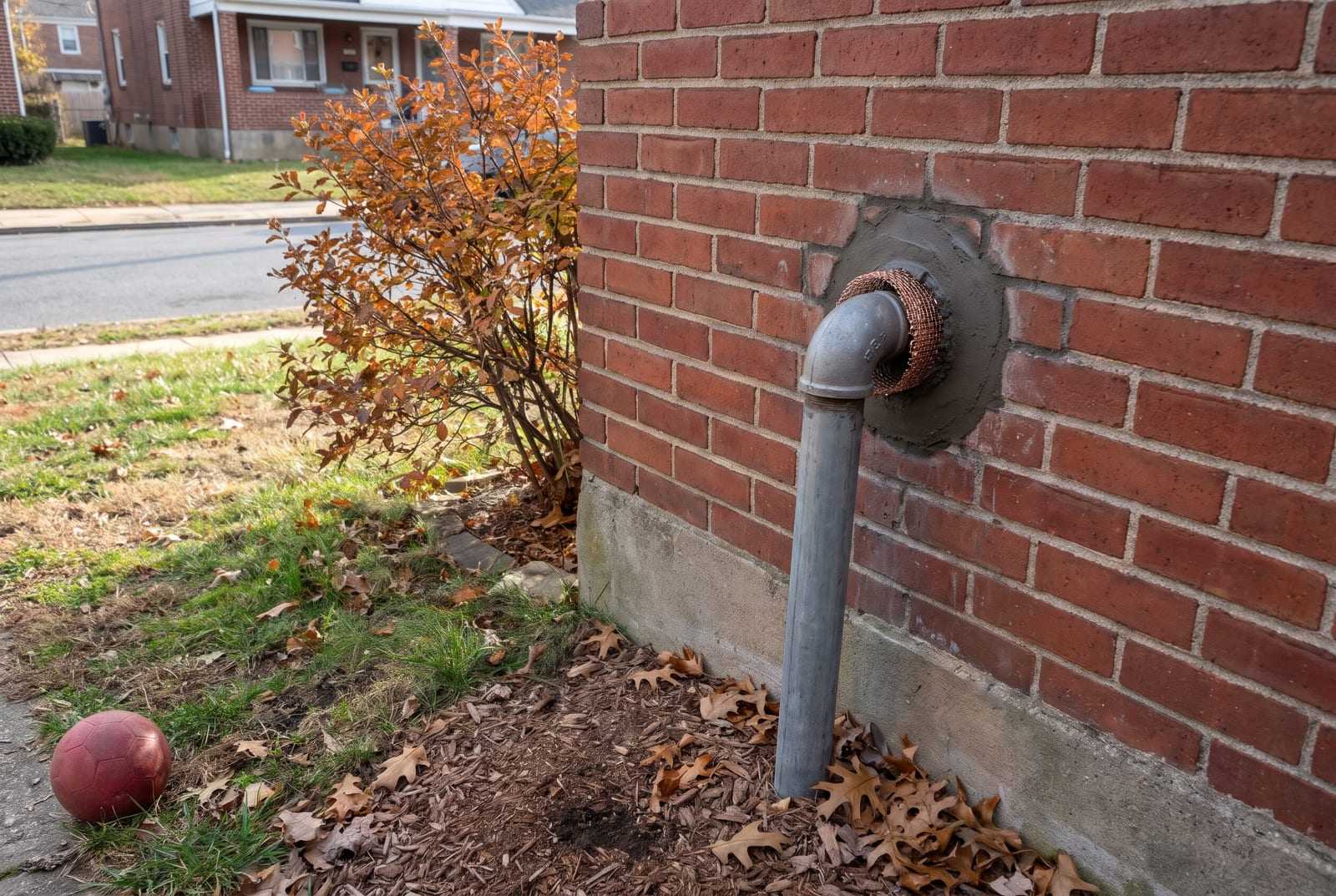
Sealing calls for materials rodents cannot chew through: copper mesh packed into the gap and finished with mortar or sealant, sheet metal, and hardware cloth over vents. Expanding foam alone does not hold, because mice chew straight through it.
Is it safe to clean up mouse droppings myself?
Yes, with care. Air the space out, wear rubber gloves and soak the droppings with disinfectant, or one part bleach to ten parts water, for five minutes before wiping them up with paper towels. Never sweep or vacuum them dry: deer mice in particular can carry hantavirus.
Do plug-in ultrasonic repellers keep mice away?
Studies of these devices have found little lasting effect. Rodents get used to the sound, and it does not pass through walls, furniture or stored boxes, so it never reaches the places they nest.
Household Steps That Discourage Rodents
- Store pantry food, pet food and birdseed in glass, metal or heavy plastic containers with tight lids.
- Keep trash in lidded cans and put it out on collection day, not days ahead.
- Pick up pet bowls at night and fallen seed under bird feeders.
- Fix dripping pipes and taps in the cellar and under sinks.
- Clear cardboard, newspapers and clutter off cellar and garage floors.
- Stack firewood off the ground and away from the house, and trim shrubs back from the walls.
- Fit door sweeps on outside doors and close the gap under the garage door.
- Check that vent covers and screens are whole and fixed in place.
Homes and businesses that have had rodents before can keep bait stations and monitoring traps checked, and treated areas under watch, with recurring maintenance visits.
Droppings in a kitchen drawer are reason enough to call.