
Household Insect Control in Northeast Philadelphia
Cockroaches, ants, spiders, silverfish and fleas each hide in their own places. We treat them there, with targeted applications indoors and along the foundation and entry points outside.
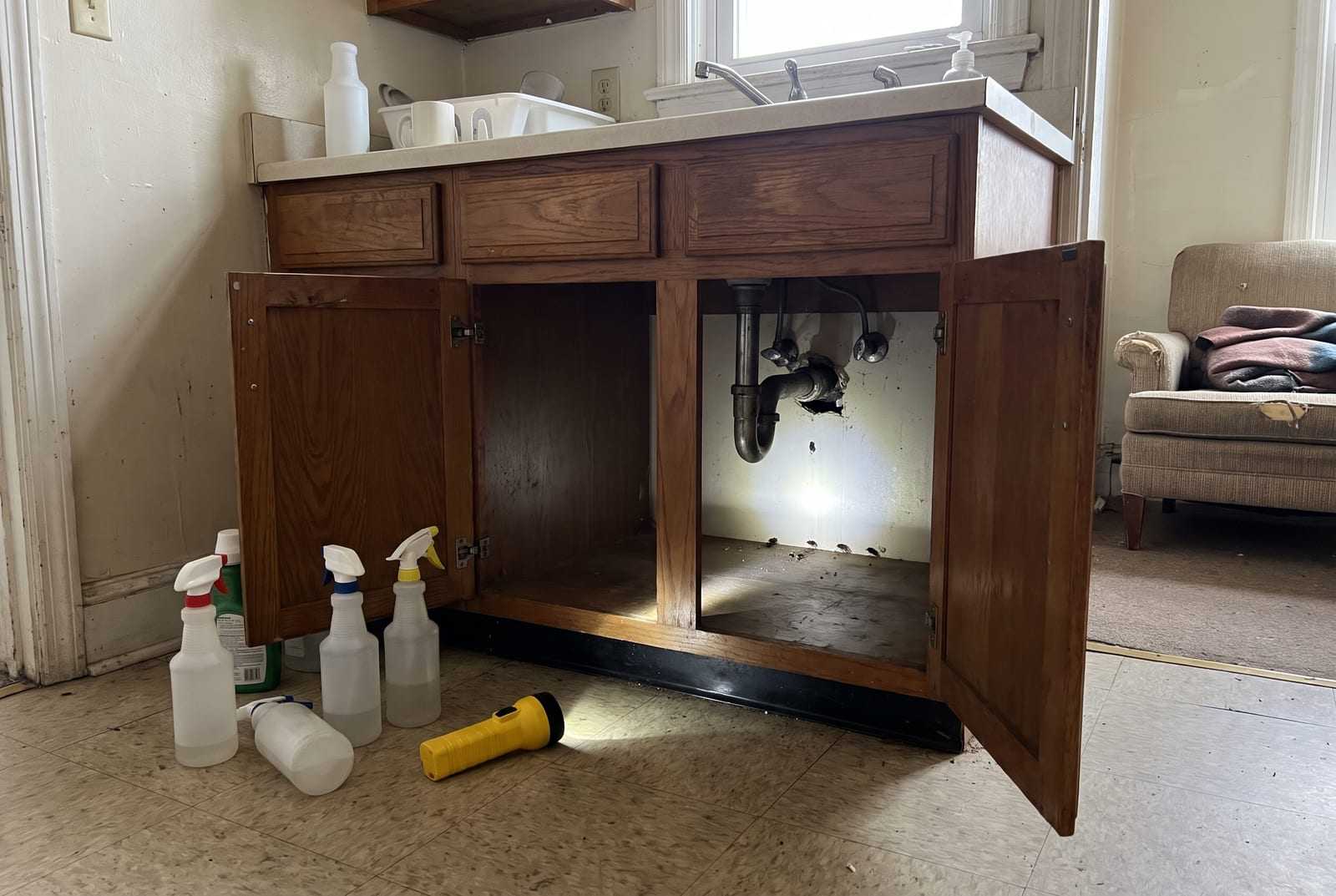
The Evidence Turns Up Before the Insect
Most household insects hide by day, so the first thing you notice is what they leave behind, and where.
| Pest | Typical signs | Where it tends to hide |
|---|---|---|
| German cockroach | Tan, half-inch roaches; droppings like ground pepper | Behind the fridge and stove, inside appliances |
| American cockroach | Reddish-brown roaches up to two inches long | Cellars, floor drains, sewer lines |
| Oriental cockroach | Shiny black, inch-long roaches; a musty smell | Damp cellars, drains, mulch |
| Odorous house ant | Trails of tiny dark ants; a rotten-coconut smell when crushed | Wall voids near pipes, under mulch |
| Pavement ant | Sand piles along pavement and cellar floor cracks | Under sidewalks, patios and slabs |
| House spider | Tangled cobwebs in corners and window tracks | Window frames, ceiling corners |
| Cellar spider | Pale, long-legged spiders on loose, shaking webs | Cellar ceilings, crawl spaces |
| Silverfish | Silvery, tapered insects; holes and stains on paper | Bathrooms, damp cellars, stored papers |
| Cat flea | Scratching pets; itchy bites around the ankles | Pet beds, carpets, rugs, upholstery |
When you have found the signs but not the insect, matching the signs to a likely pest narrows it down.
Cockroaches Hide in Warm Gaps and Come Up From Drains

German cockroaches, the small tan roaches of kitchens and bathrooms, crowd into warm gaps behind the fridge and stove and inside appliances. Each egg case holds 30 to 40 eggs, so numbers climb fast, and roaches out in daylight usually mean the hiding places are full.
The large “waterbugs” of the cellar are American and Oriental cockroaches, up from sewer lines and floor drains. In connected rowhouses, all three travel between homes along shared walls and pipe gaps. Across the trade, baits and crack-and-crevice treatments are the usual answer, since spray on open counters drives roaches deeper into the walls.
Why do cockroaches turn up in a clean kitchen?
They need water and shelter as much as food, and a slow drip under the sink is enough. They also ride in on grocery bags, delivery boxes and used appliances.
Ant Trails Start Somewhere Out of Sight

A crowd of tiny dark ants on a window sill or a counter is usually odorous house ants. The trail is only the foragers: the colony, often with many queens, sits in a wall void or under mulch outside, and spraying the trail can split it into new nests.
Pavement ants nest under sidewalks and slabs and come up through cracks in the cellar floor. For both, the fix is reaching the colony and its way in: bait the workers carry home, and treatment along the foundation and at the entry points.
Large black ants that leave heaps of wood shavings are carpenter ants, which belong with termite control.
Should I spray an ant trail when I see one?
Spray kills the ants you can see, not the colony. Wipe the trail with soapy water to remove the scent the others follow, and note where the line enters the room: that is the spot to treat.
Spiders Settle Where Insects Gather

House spiders string tangled webs across window tracks, ceiling corners and the gaps behind furniture, while long-legged cellar spiders hang loose webs from cellar ceilings. Both are there for food. Porch lights and windows draw moths and flies, gaps around the frames let them in, and the spiders follow.
Vacuuming webs and egg sacs clears a room for a while; cutting off the insects they eat keeps it clear, with tight frames and screens and treatment along the foundation and entry points outside.
Are the spiders in Philadelphia homes dangerous?
House spiders and cellar spiders are harmless to people. Pennsylvania’s black widows keep to woodpiles, sheds and stone walls outdoors, and the brown recluse is not established in the state.
Silverfish Live on Paper, Glue and Humid Air
Silverfish are silvery, tapered insects that feed at night on paper, glue and dry food. They need humid air, so they gather in bathrooms and in stone cellars kept damp by Philadelphia’s humid summers. Treating the cracks where they hide helps; a dehumidifier, a bathroom fan and plastic bins in place of cardboard keep them away.
Fleas Wait in the Carpet Between Meals
The flea on most cats and dogs is the cat flea. Adults ride on the animal, while their eggs drop into carpets, rugs and pet beds, where the next generation grows out of sight.
Flea control treats the pet and the house together: the pet through a veterinarian, the house with applications on carpets and resting places, then daily vacuuming for a few weeks. Bites on the arms and shoulders after a night’s sleep, rather than around the ankles, point to bed bugs instead.
Can a house have fleas when there are no pets?
Yes. Flea pupae can wait in their cocoons for months and hatch at the first footsteps, so people moving in where pets once lived can be bitten within days. Wildlife under a porch brings fleas too.
Household Steps That Reduce Insect Problems
- Wipe grease and crumbs from behind the stove, and leave no dishes in the sink overnight.
- Keep food and pet food in sealed containers, and pick up pet bowls at night.
- Fix dripping taps and leaking drains: insects need water more than food.
- Get cardboard boxes out of the house; roaches breed in them and silverfish eat the glue.
- Fill gaps around pipes under sinks and where cables pass through walls.
- Keep mulch, leaves and firewood back from the foundation.
- Look over deliveries and secondhand furniture before they come inside.
Monitoring Traps Show New Activity Before It Spreads
For homes and small businesses that want to stay ahead of problems, our recurring maintenance visits keep bait stations and monitoring traps checked and treated areas under watch.
A monitoring trap is a low sticky card under a sink or along a cellar wall. What it catches shows which insect is active, and where, while there are still only a few. That early warning matters most for restaurants and shops that take deliveries every day.
Roaches by the stove are worth a call before they spread.